Abstract:
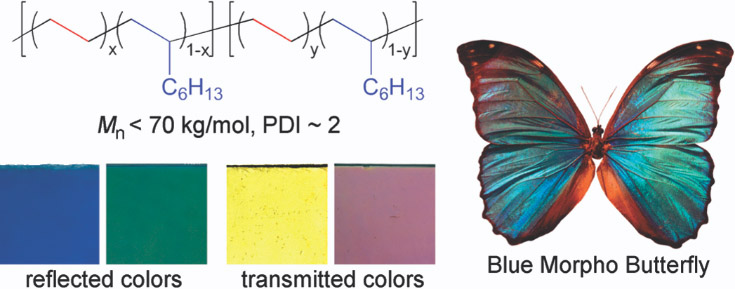
Exciting new developments in polyolefin synthesis have given rise to Olefin Block Copolymers (OBCs) with a wide range of block compositions. The block copolymers synthesized by chain shuttling technology consist of crystallizable ethylene-octene blocks with low comonomer content and high melting temperature (hard blocks), and amorphous ethylene-octene blocks with high comonomer content and low glass transition temperature (soft blocks). This talk describes the structure and property relationship of these unique polymers. The crystallizable blocks are long enough to form well-organized lamellar crystals with orthorhombic unit cells, resulting in a relatively high melting temperature. In one class of materials, the soft blocks contain relatively low octene comonomer content so that they do not show microphase separation in the melt. However, crystallization of the hard blocks forces segregation of the weakly crystallizable soft blocks into the interlamellar regions. Compared to statistical random copolymers, the block architecture imparts a substantially higher crystallization temperature, a higher melting temperature and a better organized crystal morphology than random copolymers of similar density , whilst maintaining a low glass transition temperature. These copolymers solidify at higher temperatures than random copolymers at similar densities, resulting in faster product fabrication. With increasing octene content in the soft block, the incompatibility between the hard and soft blocks becomes large enough to cause the OBCs to form ordered melt morphologies. In the solid state, the alternating crystalline and amorphous regions have surprisingly large domain spacing and, due to the difference in refractive index between the domains, the periodicity results in a partial photonic band gap for frequencies in the visible spectrum.
___________________________________
Biography:
Hongyu Chen is a fellow of Dow Chemical Company. He obtained his Ph.D. from Case Western Reserve University. After his graduation, he joined Dow Chemical at the end of 2000. He has 40 patent applications or granted patents and has more than 60 journal or conference publications. He has led the development and commercialization of low dielectric resins for electrical laminates and made significant contribution to several new products. He has been instrumental to establish the collaboration strategy and collaboration projects for Dow with universities in Asia Pacific. He is an adjunct professor at University of Queensland, Fudan University and Bejing University of Chemical Technology.
 Dr. Hongyu Chen